NA is a free, worldwide fellowship of people who share their experience, strength, and hope to help each other recover from drug addiction. No fees, no rules, no judgment: just one person helping another.
🔒 Free & Confidential · Available 24/7 · No Sign-Up Required
Narcotics Anonymous is an international fellowship of men and women for whom drugs had become a major problem. It is nonprofessional, self-supporting, multiracial, apolitical, and available almost everywhere. There are no age or education requirements; membership is open to anyone who wants to do something about their substance use.
The only requirement for membership is a desire to stop using. NA does not keep membership records, conduct research, or accept outside funding. Its single purpose is to help addicts recover through a program of action based on the 12 Steps.
NA was founded in Los Angeles, California in 1953 by Jimmy Kinnon (“Jimmy K.”) and other recovering addicts who saw the need for a fellowship that addressed addiction to all drugs, rather than just alcohol. Their early meetings formed the foundation of what would become a global movement.
In 1983, the fellowship published its foundational text, Narcotics Anonymous; nicknamed the “Basic Text,” it outlined the 12 Steps and the NA program of recovery. It unified the fellowship and provided a clear path for newcomers seeking recovery from addiction.
From those founding members, NA grew to include thousands of members by the 1980s, and more than 1 million members across 144+ countries today. Its model of peer support and the 12 Steps has helped countless individuals build fulfilling, drug-free lives.
Jimmy K. and others hold the first NA meetings in Southern California
The Basic Text is published, unifying the expanding global fellowship
NA World Services establishes structured global outreach programs
NA spreads rapidly across the globe, reaching thousands of weekly groups
1M+ members, 70,000+ weekly groups, available in 144+ countries
The 12 Steps are a set of guiding principles outlining a course of action for recovery from addiction. They address the physical, mental, and spiritual dimensions of substance use; they have helped countless individuals achieve lasting recovery since the fellowship began.
Admitting Powerlessness
Acknowledging that addiction has become unmanageable and that willpower alone is not enough to overcome it.
Believing in a Higher Power
Coming to believe that a power greater than ourselves, defined personally by each member, can restore sanity.
Turning It Over
Making a conscious decision to surrender self-will and seek guidance from a Higher Power as each person understands it.
Moral Inventory
Taking an honest, fearless inventory of personal strengths and weaknesses: fears, resentments, and harmful patterns.
Admitting Wrongs
Sharing the results of that inventory openly with a Higher Power, oneself, and another trusted human being.
Readiness for Change
Becoming fully willing to let go of character defects and the behaviors that fuel the cycle of addiction.
Asking for Help
Humbly asking a Higher Power to remove shortcomings: an act of surrender that many members find deeply liberating.
List of Amends
Creating a written list of all people harmed by one’s active addiction, and developing a willingness to make things right.
Making Direct Amends
Personally making amends to those who were harmed, except when doing so would cause further harm to them or others.
Daily Inventory
Continuing to take personal stock daily and promptly admitting when wrong; maintaining the honesty built in earlier steps.
Prayer & Meditation
Using quiet reflection and prayer to deepen one’s conscious awareness and seek guidance for daily living in recovery.
Carrying the Message
Having achieved a spiritual awakening, sharing the message of recovery with others still suffering and practicing these principles in all areas of life.
Ready to experience the 12 Steps with a supportive NA group near you?
NA welcomes anyone with a desire to stop using drugs. There are no other requirements: no income threshold, no minimum substance use history, and no formal diagnosis needed.
If you’re questioning your substance use for the first time, NA is a safe place to explore, with zero pressure to commit, speak, or identify as an addict.
For those who have struggled with drugs for years or decades, NA provides a non-judgmental path forward built on lived experience: not clinical theory.
Many people leaving inpatient rehab use NA as their long-term support system. NA provides daily structure, community accountability, and a sponsor relationship that clinical treatment cannot replicate.
Open NA meetings welcome family members and friends. Nar-Anon, a sister fellowship, is specifically designed for those affected by a loved one’s addiction.
Many NA groups across the U.S. are specifically LGBTQ+-affirming. NA welcomes everyone unconditionally: your identity has no bearing on your ability to seek and achieve recovery.
You do not need to believe in God to attend NA. The “Higher Power” concept is deliberately broad; many atheist and agnostic members define it as the group itself, nature, or their own conscience.
Ready to Take the First Step?
Whether you’re curious, ready, or somewhere in between, calling our helpline is the fastest, most private way to find a meeting in your area. A real person answers every time.
Free & Confidential · Available 24/7 · No Obligation
NA and clinical rehab are not competitors; most recovery professionals recommend using both together. Here’s how they differ and work together.
Free & Peer-Based
Clinical & Medical
Recommended Approach
Most addiction professionals recommend combining clinical treatment for initial abstinence with NA for long-term community and accountability. Together, they address both the physical and social dimensions of recovery.
Important: If you are experiencing physical withdrawal symptoms, please seek immediate medical attention before attending an NA meeting. Substance withdrawal can be medically dangerous and may require supervised detox. Call 911 for emergencies or our helpline at 1-888-708-7060 to be connected with medical resources.
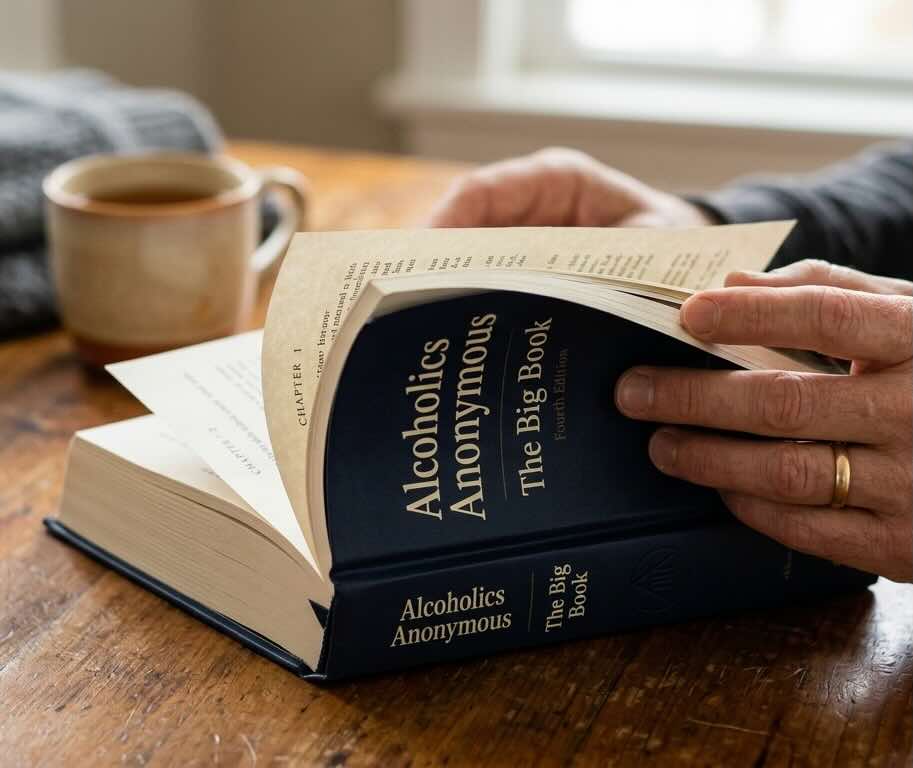
First published in 1983, Narcotics Anonymous (universally called the “Basic Text”) is the foundational literature of the NA program. Written primarily by recovering addicts to share their collective experience, it describes the 12 Steps and the NA model of recovery.
With millions of copies distributed globally and translated into more than 30 languages, it serves as the ultimate guide for individuals navigating life without the use of drugs. The book includes personal stories that outline the journey from active addiction to lasting recovery.
Is Narcotics Anonymous a religious organization?
No. NA is a spiritual program, not a religious one. While the 12 Steps reference a “Higher Power,” each member defines that concept entirely for themselves. NA has no official religious affiliation and warmly welcomes atheists, agnostics, and people of any or no faith tradition.
Does NA actually work?
Yes. Research consistently shows that participation in 12-Step programs like NA significantly increases the chances of achieving long-term recovery. Members who attend regularly and engage with the community are much more likely to maintain continuous abstinence over time compared to those who attempt recovery alone.
Do I have to stop using before my first NA meeting?
No. There is no requirement to be completely clean before attending your first meeting. The only requirement is a desire to stop. If you are experiencing severe withdrawal symptoms, please seek professional medical care before attending.
What is an NA sponsor?
A sponsor is an experienced NA member who personally guides a newer member through the 12 Steps. Sponsorship is voluntary and informal: it’s one recovering person helping another. You are never required to get a sponsor, but most long-term members credit their sponsor as essential to their recovery.
What is the difference between AA and NA?
Narcotics Anonymous (NA) follows a similar 12-Step model to AA but is focused on recovery from the disease of addiction across all drugs, including alcohol. AA’s primary focus is specifically on alcoholism. Some people choose to attend both fellowships.
How long does it take for NA to work?
Recovery is personal and there is no universal timeline. NA suggests attending 90 meetings in the first 90 days to build early momentum and establish connections. Many members report meaningful change within weeks; others describe recovery as a lifelong process of continuous growth.