
Honest Answers

Frequently Asked Questions About AA

These are the questions people ask most before attending their first meeting, and the ones that come up again after they have been going for a while. Every answer here is written as plainly as possible.

๐Ÿ”’ Free & Confidential  ยท  No Judgment  ยท  Available 24/7

How AA meetings work - two people engaged in a quiet, honest conversation in a warm and safe environment
About This Page

Questions Worth Asking Before You Go

Many people spend a long time reading about AA before they ever walk into a meeting. Looking things up before going somewhere unfamiliar is a reasonable way to reduce uncertainty, and the questions here are the ones that come up most consistently from people in that position. Every answer is written as directly as possible, without softening or overselling anything.

If something important is not covered here, calling 1-888-708-7060 will connect you with a real person who can answer whatever is on your mind and help you find a meeting in your area.

Most Common First Question

"Do I have to speak?" Speaking at a meeting is never required. You can sit in the back, listen to the whole thing, and leave without saying a word to anyone. Many people attend several meetings this way before they feel ready to share anything at all.

๐Ÿšช Before Your First Meeting

What to Expect When You Walk In

Do I have to speak at my first meeting?

Speaking is never required at any AA meeting. You can sit quietly and listen for as long as you need, and many people attend for weeks before saying anything at all. Nobody will ask you to introduce yourself, share your story, or explain why you are there. The only thing your first meeting asks of you is that you showed up.

What actually happens at an AA meeting?

Most meetings open with a brief reading from AA literature, often a passage from the Big Book or a short reading about one of the 12 Steps. Depending on the meeting format, either one person then speaks for most of the hour about their personal experience with alcohol and recovery, or the group shares briefly on a topic, one person at a time. Meetings typically run 60 minutes and close with a group recitation of the Serenity Prayer. Afterward, people tend to stay and talk over coffee, though staying is entirely optional.

How do I find out where and when a meeting is?

The AA meetings directory on this site lists meetings by state, city, and neighborhood, with current times and addresses. Your regional AA intergroup website is another reliable source. If searching feels like too much right now, calling 1-888-708-7060 will connect you with a real person who can find the nearest meeting to your location within a few minutes.

What should I wear or bring?

There is no dress code at AA meetings. People arrive in work clothes, casual clothes, and everything in between. Copies of AA literature are generally available at the meeting itself, so there is nothing you need to bring with you. Some people bring a notebook over time, but it is not something to think about for a first visit.

Will I know anyone there?

That depends on the meeting location, and many people choose their first meeting deliberately in a part of town they do not frequent, precisely for that reason. Attending a meeting in a different neighborhood or trying an online meeting first are both completely reasonable ways to manage that concern. People who prefer to start closer to home also do that successfully. Whatever feels more manageable is the right starting point.

Is it normal to feel nervous before going?

Very. Almost everyone who attends their first AA meeting describes feeling nervous before walking in. The same people tend to describe the inside of the room as far less intimidating than they had imagined. The experience of being anxious before a first meeting is so consistent across AA membership that most people in the room will recognize it immediately if you mention it, because they remember their own first time vividly.

Can I leave early if I need to?

Yes. There is no formal check-in at an AA meeting, and you can leave at any point during the hour. Nobody will stop you or follow up. If something feels overwhelming or you simply need to go, leaving is fine, and coming back on another day still counts for what it is worth.

Do I have to be sober when I attend?

AA asks that people attending do not disrupt the meeting. Arriving visibly intoxicated can make the experience difficult for others in the room, even though the impulse to reach out in a difficult moment is understood. If you are in crisis right now, calling 1-888-708-7060 first gives you a chance to talk with someone who can help you figure out the best next step before you walk in anywhere.

AA meetings in person - an authentic portrait of a person who has found recovery and answers through support

Ready When You Are

Reading About AA Is a Starting Point. Talking to Someone Is Better.

There is a difference between reading about AA and talking with someone who knows the local meeting landscape and can answer the specific question you actually have. Every call to 1-888-708-7060 reaches a real person who will give you as much time as you need.

  • โœ”A real person answers every call, at any hour
  • โœ”Meetings found in your specific city or town
  • โœ”No pressure, no judgment, no scripts
  • โœ”Free and completely confidential
๐Ÿ“ž 1-888-708-7060

Available 24/7  ยท  All 50 States  ยท  Free

๐Ÿ“– How AA Works

The Program, the Steps, and the Culture
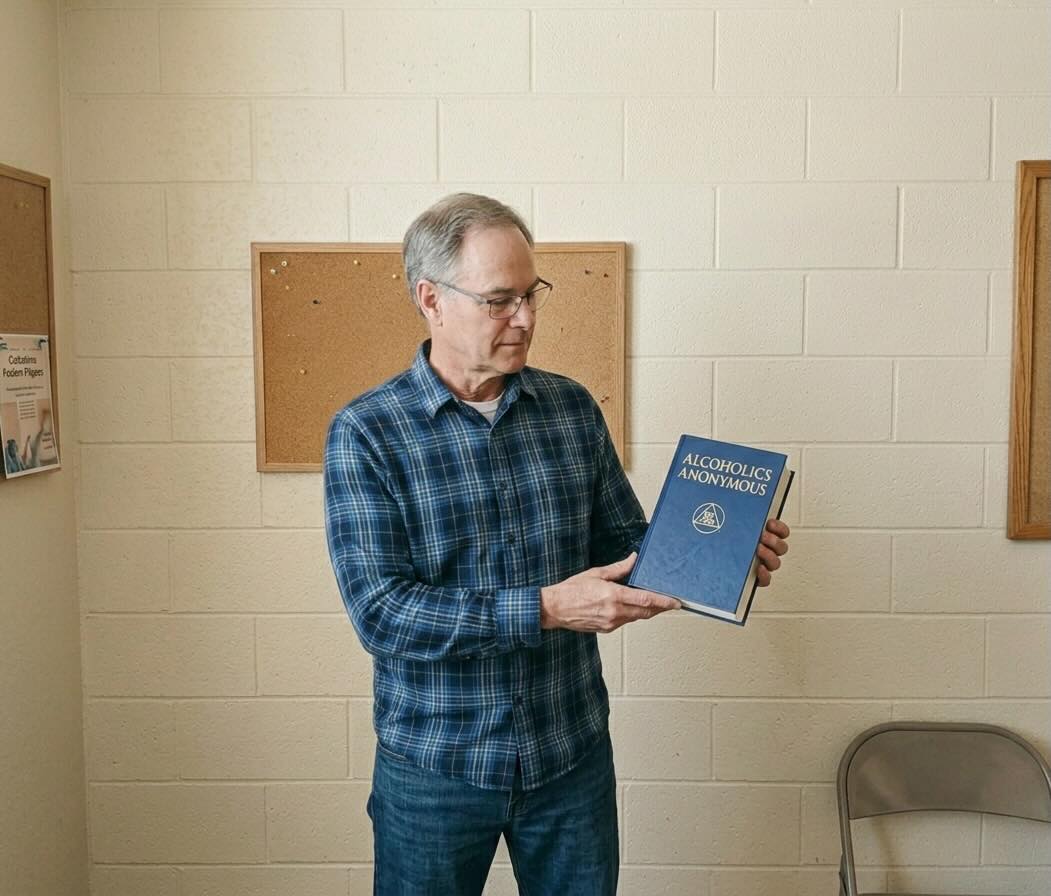
Josh reading the AA Big Book - a well-read and supportive recovery resource

How does AA actually work?

AA works through a combination of regular attendance at meetings, honest sharing with others who understand the same problem from the inside, and working through the 12 Steps with a sponsor. The connection between members is as central to the program as the formal structure. Many people describe the combination of feeling genuinely understood and having a clear path forward as what made sobriety possible after other approaches had not.

What are the 12 Steps?

The 12 Steps are a set of guiding principles developed in the late 1930s that form the core of AA's program. They begin with acknowledging powerlessness over alcohol and move progressively through honest self-examination, making amends to people harmed by past behavior, and building an ongoing practice of reflection and service. Members work through the Steps with a sponsor at their own pace, and the process typically takes months rather than weeks. A full explanation is available on the About AA page.

Is AA religious?

AA is a spiritual program rather than a religious one, and membership does not require belief in any particular faith or tradition. The program refers to a "higher power" that each member is free to define entirely on their own terms. Many members with no religious background interpret this as the group itself, the principles of the program, or simply something larger than individual willpower. Secular and agnostic AA meetings are available in most major cities for people who prefer a format that does not use religious language at all.

Does AA have a success rate?

AA has been studied extensively over several decades. Research published in Cochrane Reviews found that AA and 12-step facilitation programs are at least as effective as other treatments at achieving abstinence, and in some analyses more effective at maintaining long-term sobriety. Individual outcomes vary based on how actively someone engages with the program and whether they attend consistently over time. AA itself acknowledges openly that the program does not work for everyone, while the evidence suggests it works durably for a meaningful share of the people who commit to it.

Do I have to commit to anything by attending?

Attending an AA meeting carries no obligations of any kind. You can go once, decide it is not for you, and walk away without having signed anything, registered anywhere, or committed to returning. AA's own literature defines membership as requiring nothing more than a desire to stop drinking, and even that is understood on your own terms.

How is AA different from rehab or therapy?

AA is a free peer support fellowship built around shared experience and mutual accountability, which is a fundamentally different model from clinical treatment. It does not provide medical detox, prescribe medication, or deliver therapy in any clinical sense. Many people attend AA alongside treatment at a rehabilitation center or in parallel with individual therapy, and the two approaches work well together. AA is a complement to professional care when that care is needed, not a replacement for it.

What is a home group?

A home group is the specific AA meeting that a member attends consistently and considers their primary group within the fellowship. Members of a home group often take on small service roles such as setting up chairs, making coffee, or welcoming people who are new. Having a home group gives a member a consistent community and a sense of belonging within the broader network of meetings. Most people find their home group gradually, after attending several different meetings over a few weeks or months.

๐Ÿ“ Finding Meetings

Locating a Meeting That Works for You

How do I find an AA meeting near me?

The AA meetings directory on this site covers every US state, with individual pages for cities and neighborhoods that list current meeting times and addresses. Your regional AA intergroup website is another reliable source. If navigating a directory feels like too much effort right now, a call to 1-888-708-7060 will reach a real person who can find the meeting closest to your location in a few minutes.

Are there meetings available early in the morning or late at night?

Most major US cities have meetings starting as early as 5:30 or 6:00 AM and running through midnight or later, every day of the week. In cities like New York, Los Angeles, and Houston, meetings run around the clock. Online AA meetings are available every hour of every day regardless of location, which makes them a reliable option when in-person timing is difficult.

What if I live somewhere rural with few nearby meetings?

Online AA meetings are available to anyone in the country regardless of where they live, and they run continuously throughout the day and night. Phone-based meetings are also available for people with limited internet access. Calling 1-888-708-7060 can help identify the best combination of in-person and online options for wherever you are located.

Are there meetings for Spanish speakers?

Spanish-language AA meetings are available across the United States in large numbers, particularly in cities like Miami, Houston, Los Angeles, New York, San Antonio, and Chicago. Bilingual meetings, where both English and Spanish are spoken, are listed in most major city directories as well. Calling 1-888-708-7060 is the quickest way to find the nearest Spanish-language meeting to your location.

How do I know which meeting is right for me?

Most people try several different groups before settling into one where they feel comfortable, and that process usually takes only a few weeks. For a first visit, an open speaker meeting or a beginners meeting tends to be the most approachable starting point because neither requires any prior knowledge of the program or any participation. The meeting types page explains every format in detail so you can get a sense of what each one involves before you go.

Can I attend meetings in other cities when I travel?

Yes. AA meetings are available in over 180 countries, and attending a meeting while traveling is common practice within the fellowship. Open meetings welcome any visitor. Looking up the local AA intergroup in the city you are visiting will give you current meeting schedules and addresses, and online meetings are always an option when travel makes finding an in-person group more complicated.

๐Ÿ”’ Anonymity & Privacy

Who Knows You Were There

"Who you see here, what you hear here, when you leave here, let it stay here."

Traditional AA closing statement, read aloud at the end of most meetings

Is what I say at an AA meeting confidential?

Anonymity is one of AA's foundational principles, and members are trusted not to share what they hear in meetings or identify others as AA members outside the group. AA does not carry the formal legal protections that apply to therapists or physicians, but the social culture around anonymity is taken seriously by the overwhelming majority of members. It is also the reason the tradition is read aloud at the end of most meetings โ€” as a regular reminder, not an assumption.

Do I have to use my real name?

AA uses first names only, and even that is a convention rather than a requirement. You can use a shortened version of your name or simply choose not to introduce yourself at all. Nobody at an AA meeting will ask for your last name, your address, your phone number, or any other identifying information. Contact details are shared only when a member chooses to give them to someone they trust.

Will my employer, insurance company, or family find out I attended?

AA keeps no membership records, no attendance lists, and no contact databases of any kind. There is nothing to disclose to an employer or insurer because nothing is recorded anywhere. Your attendance is known only to the people who were in that room on that day, and they are bound by the same tradition of anonymity that protects you.

What if I see someone I know at a meeting?

The principle of anonymity works in both directions, which means you are protected just as they are. You both came to the same place for the same reason, and most people describe this experience as unexpectedly reassuring rather than uncomfortable. For anyone who prefers to avoid that possibility entirely, choosing a meeting in a different part of town or attending an online meeting is a simple and effective solution.

Does anonymity apply to online meetings?

AA asks members to maintain anonymity at the level of press, radio, film, and other public media, which now includes social media and online platforms. Members are asked not to identify themselves or others as AA members in any public forum. Online meetings address this by not recording sessions and by asking participants not to share what is said or who was present outside the meeting itself.

๐Ÿค Sponsorship

What a Sponsor Is and What They Do

Josh and his AA sponsor having a supportive conversation

What is an AA sponsor?

A sponsor is an AA member with meaningful sobriety, typically at least a year or two, who guides a newer member through the 12 Steps and offers support during the early period of recovery. The sponsor's role is grounded entirely in their own lived experience of the program rather than any professional qualification. They share what worked for them, help the person they sponsor understand the material, and make themselves available when things get difficult. It is a relationship built on shared experience in the most direct sense of that phrase.

Do I need a sponsor to attend AA meetings?

Sponsorship is not a requirement for attending meetings. Many people attend for weeks or months before getting a sponsor, and some attend for considerably longer. A sponsor becomes most valuable when a member is ready to work through the 12 Steps in depth, which tends to happen organically over time rather than on any set schedule.

How do I find a sponsor?

The most common way is through regular meeting attendance. When someone speaks in a way that resonates with your own experience, approaching them after the meeting and asking if they would be willing to sponsor you is how most sponsor relationships begin. People who are asked are generally honored by the request. Sponsors typically come from the same gender group, though this is a personal choice rather than a formal rule, and different groups have different norms around it.

What does a sponsor actually do?

A sponsor works through the 12 Steps with their sponsee at a pace that suits both of them, shares their experience honestly throughout that process, and is available for phone calls and conversations between meetings. In early sobriety especially, a sponsor may check in regularly. The relationship is bounded by the context of AA, which means a sponsor is a guide through the program, not an advisor on life decisions generally, a financial resource, or a therapist. Those limits are part of what keeps the relationship functional over time.

What if a sponsor relationship stops working?

Sponsor relationships end and change for all kinds of reasons, and doing so is a normal and unremarkable part of AA life. A personality mismatch, a change in circumstances, or simply outgrowing a particular dynamic are all sufficient reasons to find a new sponsor. The relationship is voluntary for both people involved, and finding someone new is encouraged rather than discouraged when the existing arrangement has run its course.

โค๏ธ Family & Loved Ones

When Someone You Love Has a Drinking Problem

Josh and his family attending an AA meeting together for support

Can I attend an AA meeting on behalf of someone I love?

Open AA meetings welcome family members and concerned friends without any requirement that you identify as having a drinking problem yourself. Attending as a family member is a legitimate reason to be there, and it can be a valuable way to understand what the program actually is before encouraging someone you care about to try it.

What is Al-Anon and how is it different from AA?

Al-Anon is a free fellowship specifically for family members and close friends of people with a drinking problem. It is a separate organization from AA, with its own meetings, its own 12-step program, and its own literature, and its focus is on helping the people around a drinker manage the impact on their own lives rather than on the drinker's recovery directly. Alateen runs alongside Al-Anon for teenagers living in a household affected by someone else's alcoholism.

Can I make someone go to AA?

AA is entirely voluntary, and the program's own literature is clear that it works best for people who arrive on their own terms. Someone who attends under pressure or ultimatum may go through the motions of the program without genuinely engaging with it. Most people working in recovery encourage family members to focus on what is within their own control, including their responses, their boundaries, and their own wellbeing, rather than on trying to compel someone who is not yet ready to take a step they have not chosen.

How do I talk to someone about their drinking?

The most productive conversations happen when the person is sober, when the approach is grounded in genuine concern rather than accusation, and when you speak to specific things you have observed rather than broad characterizations of who they are. Expressing that you are worried about them tends to be received more openly than asserting that they have a problem. If the conversation feels difficult to initiate, calling 1-888-708-7060 first gives you the chance to think it through with someone who has experience helping families in exactly this situation.

What if my loved one refuses to go to AA?

This is one of the most painful situations a family member can be in, and Al-Anon exists because so many people find themselves there. The program helps family members understand that they cannot control or cure another person's alcoholism, and it focuses on building stability and peace regardless of what their loved one chooses to do. Seeking your own support through Al-Anon or a counselor is a legitimate and important step, and it does not require waiting for your loved one to take any action first.

Is it okay to call the helpline if I am worried about a family member rather than myself?

Calling 1-888-708-7060 on behalf of a loved one is something many people do, and there is no need to have the situation sorted out before picking up the phone. A real person will listen, answer whatever questions you have, and help you think through options both for yourself and for the person you are concerned about.


๐Ÿ’ฐ Cost & Membership

What AA Costs and How Membership Works

Is AA really free?

Yes. Attending an AA meeting carries no financial obligation of any kind. AA is entirely self-supporting through small voluntary contributions from its own members, and a collection is passed at most meetings, usually a basket or a coffee can. Contributing to that collection is optional, and nobody tracks whether you do. Your attendance is genuinely welcome regardless of what you put in.

How does AA fund itself?

Individual groups cover their costs through the voluntary contributions collected at meetings, which typically go toward rent, coffee, and AA literature. AA's governing tradition explicitly states that the fellowship declines outside donations from corporations, governments, and other organizations in order to protect its independence and neutrality. Each group is funded by the people who attend it, and by nothing else.

Is there a formal membership process?

AA has no registration, no application, and no membership card. Its own literature defines membership in a single sentence: anyone who has a desire to stop drinking is a member of Alcoholics Anonymous. There is no authority to grant or deny membership, and no process to complete beyond walking through the door.

Do I need health insurance to attend AA?

AA is a peer fellowship rather than a clinical service, so insurance plays no role in attendance. Attending a meeting involves no paperwork, no insurance verification, and no billing of any kind. The absence of any administrative process is one of the things that makes AA accessible to people in circumstances where other forms of help are financially out of reach.

Is AA affiliated with any religious organization, government agency, or treatment center?

AA maintains no affiliation with any outside organization. It does not endorse other services, accept funding from treatment centers or hospitals, and has no formal relationship with any government agency or religious body. Rehabilitation centers frequently recommend AA to patients, and the two can complement each other productively, but they operate as entirely separate entities with no formal connection between them.

Still Have a Question?

A real person answers every call, with no hold music and no scripts.

๐Ÿ“ž 1-888-708-7060

Find an AA Meeting Near You Today

The meetings directory covers all 50 states, down to the neighborhood level. A call to the helpline reaches someone who can find a meeting close to wherever you are right now.

Free & Confidential  ยท  Available 24/7  ยท  All 50 States