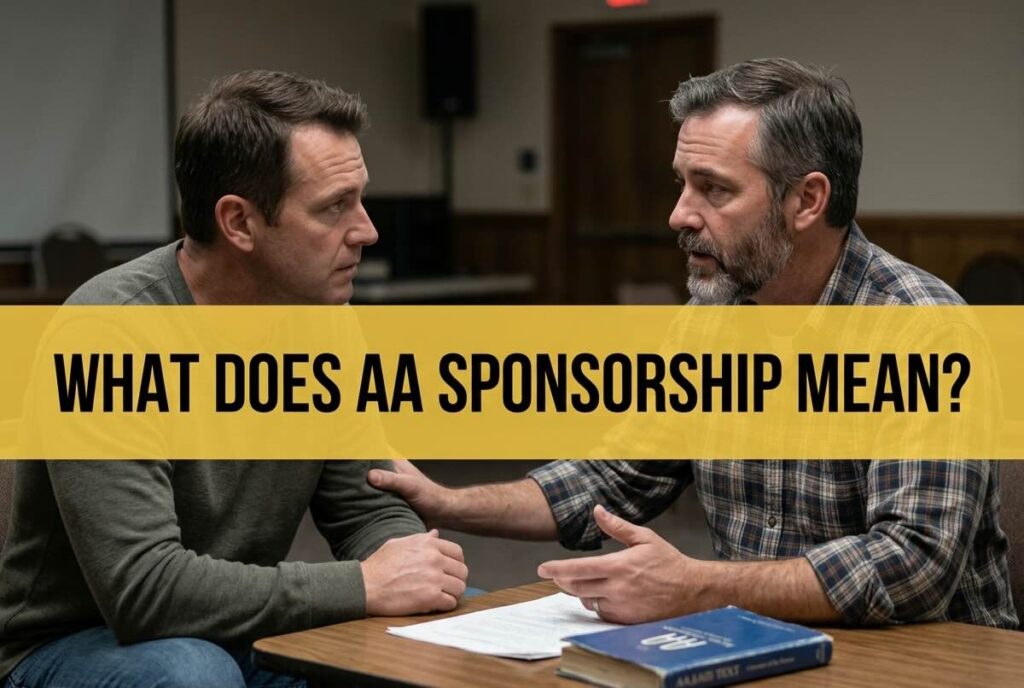
AA Sponsorship is the backbone of how Alcoholics Anonymous actually works. Meetings provide community and shared experience. The Steps provide a course of action. Sponsorship provides the one-to-one human relationship that makes both of those things possible for someone new to recovery. An AA sponsor is a more experienced member who has worked the 12 Steps and agrees to guide a newcomer through that same process, sharing their personal experience honestly and being available between meetings when the work gets difficult.
The concept goes back to AA’s founding. In 1935, Bill Wilson recognized that helping another alcoholic was essential to maintaining his own sobriety. That observation became a structural principle of the entire program: recovery is carried from one person to another through direct, personal contact. Every member who has sustained sobriety in AA typically has someone who did that for them. Sponsorship is how the program reproduces itself.
AA Sponsorship: Key Facts
- What a sponsor is: An experienced AA member who has worked the 12 Steps and guides a newer member through the same process based on their own recovery experience
- What a sponsor is not: A therapist, counselor, or clinical professional. Sponsors provide peer guidance, not clinical treatment
- How the relationship works: One-to-one, outside of meetings, through regular phone calls, in-person meetings, and direct Step work done in writing
- Who can be a sponsor: Any AA member with stable sobriety who has worked all 12 Steps. Studies show the average sponsor has attended meetings for 9.5 years
- What sponsors do: Guide through the 12 Steps, provide accountability, offer a confidential space for honest conversation, and share their experience at each stage of recovery
- Benefits for the sponsor: Sponsoring others reinforces a sponsor’s own recovery, maintains accountability, and fulfills AA’s 12th Step principle of service
- Is a sponsor required: AA does not mandate sponsorship. Most experienced members and clinical research strongly recommend it for people serious about sustained recovery
What Sponsorship Means in AA
AA’s official pamphlet Questions and Answers on Sponsorship defines the relationship plainly: sponsorship is one alcoholic who has made progress in the recovery program sharing that experience on a continuous, individual basis with another alcoholic who is trying to stay sober. The emphasis on continuous and individual distinguishes sponsorship from what happens in meetings. A meeting provides shared experience among a group. A sponsor provides sustained, personal engagement with one person over time.
The sponsor-sponsee relationship is built on two things: honest disclosure and shared experience. The sponsee brings their actual situation, including the parts they are not comfortable sharing in a room full of people. The sponsor brings direct personal knowledge of what working through those same issues looks like in practice. Neither person needs clinical credentials for this exchange to be valuable. The value comes precisely from the peer dimension: one person who has been through it telling another person who is going through it what their experience was.
Research supports the effectiveness of this model. A study cited in Alcoholism: Clinical and Experimental Research found that having a sponsor was associated with significantly higher rates of AA participation and abstinence at follow-up. The sponsor relationship creates a specific form of social connection, based on shared experience of addiction rather than on professional expertise, that research consistently identifies as protective against relapse.
What a Sponsor Actually Does
The primary work of a sponsor is guiding a sponsee through the 12 Steps. This means meeting regularly to review written Step work, asking questions that push the sponsee toward greater honesty, sharing their own experience with each Step, and helping the sponsee understand what the Step requires in practical terms. Step 4, the written moral inventory, and Step 9, making direct amends, typically require the most sustained sponsor involvement because both involve significant emotional difficulty and practical complexity.
Beyond Step work, sponsors serve as the first point of contact when a sponsee is in a difficult moment. Someone experiencing a strong craving, a conflict that feels overwhelming, or a situation where they are tempted to rationalize drinking is expected to call their sponsor before making any decisions. This immediate availability is one of the features of sponsorship that distinguishes it from therapy: a sponsor is accessible in real time, not only during scheduled appointments.
Sponsors also provide what AA literature calls an honest mirror. Many people in early recovery have developed significant distortions in how they perceive themselves, their relationships, and their behavior. A sponsor who knows the sponsee’s history and has heard their Step 4 inventory is positioned to offer feedback that is honest without being clinical, grounded in shared experience rather than professional assessment. This honest feedback, delivered within a relationship built on trust, is one of the most therapeutically significant things sponsorship provides.
What a Sponsor Does Not Do
The boundaries of the sponsor role matter as much as its responsibilities. A sponsor does not provide therapy, psychiatric care, or medical advice. When a sponsee is dealing with a mental health condition, a medical issue, or a crisis that requires professional intervention, a good sponsor directs them toward appropriate professional care rather than attempting to address it through the sponsorship relationship. AA is explicit on this point in its literature, and experienced sponsors consistently reinforce it.
A sponsor does not manage a sponsee’s life or make decisions for them. The sponsor’s role is to share their experience and offer guidance based on what worked in their own recovery. The sponsee retains full autonomy and responsibility for their own choices. A sponsor who attempts to control a sponsee’s relationships, finances, or daily decisions has stepped outside the appropriate boundaries of the role.
A sponsor also does not provide around-the-clock emotional support for problems unrelated to recovery. The sponsor relationship is specifically organized around sobriety and the 12 Steps. Sponsors who find themselves functioning as a primary emotional support for all of a sponsee’s life difficulties are typically encouraged by their own sponsors or AA community to clarify the boundaries of the relationship.
How to Find a Sponsor
The process of finding a sponsor is informal. There is no matching system, no application, and no central coordination. The standard AA guidance is to attend meetings regularly, listen to people share, identify someone whose recovery you respect, and ask them directly whether they would be willing to sponsor you. Most experienced AA members are willing to sponsor and receive such a request as a compliment rather than a burden.
AA’s traditional guidance on choosing a sponsor includes several practical considerations. Choose someone with stable sobriety who has worked all 12 Steps with their own sponsor. Choose someone you can be honest with rather than someone you want to impress. Choose someone whose life demonstrates the kind of recovery you want, not just abstinence from alcohol but the behavioral and attitudinal change the program aims to produce. The old AA saying “stick with the winners” refers to this principle.
On the question of gender, traditional AA practice recommends that newcomers choose a sponsor of the same gender or, for non-binary individuals, someone they feel they can be fully honest with without the complication of romantic or sexual attraction. This recommendation exists to protect the integrity of the sponsor relationship, which requires a level of vulnerability and honesty that can be compromised when attraction is present. The Orlando Recovery Center’s guidance on sponsor selection addresses these considerations in practical terms.
Temporary Sponsors
Many AA groups encourage newcomers to ask someone to be a temporary sponsor immediately, before they have had enough time to observe multiple members and make an informed long-term choice. A temporary sponsor serves the same function as a full sponsor in the short term: someone to call, someone to attend meetings with, and someone to begin Step work with if the newcomer is ready. A temporary sponsorship can become permanent or can transition naturally once the newcomer has identified someone they want to work with long-term.
Temporary sponsorship reflects AA’s practical orientation toward action. Waiting to find the ideal sponsor before beginning any Step work or building any one-to-one connection is understood in AA as a form of delay that costs newcomers the support they need most in early sobriety, when the risk of relapse is highest. Engaging with a temporary sponsor immediately addresses this risk while the longer-term relationship develops.
Why Sponsoring Others Helps the Sponsor
Sponsorship is structured as a reciprocal relationship. The sponsee receives guidance and accountability. The sponsor receives something equally important: continued engagement with the work of their own recovery. Sponsoring another person requires a sponsor to revisit the Steps, articulate their experience honestly, and stay actively connected to AA’s program rather than drifting into passive attendance.
AA’s 12th Step explicitly frames helping others as a component of personal recovery rather than an act of charity. The therapeutic mechanism is well-established: explaining and modeling recovery reinforces the sponsor’s own understanding and commitment. Research on the helper-therapy principle, documented in peer recovery support literature, consistently finds that helping others with a shared problem strengthens the helper’s own recovery outcomes. A 2012 study in Alcoholism: Clinical and Experimental Research found that AA members who sponsored others had better sobriety outcomes at follow-up than those who participated in meetings but did not engage in 12th Step work.
How Sponsorship Compares to Clinical Treatment
Sponsorship and clinical treatment address different dimensions of alcohol use disorder and are most effective when used together rather than as substitutes for each other. A sponsor provides peer guidance, lived experience, and 24-hour availability based on a shared personal history with alcoholism. A clinician provides evidence-based psychological assessment, psychiatric care, medication management where indicated, and treatment for co-occurring mental health conditions that sponsorship cannot address.
Many people in sustained recovery describe their sponsor relationship and their clinical treatment as serving distinct but complementary purposes. The sponsor offers what no therapist can fully replicate: the specific credibility of someone who has actually been where the sponsee is and found a way through. The clinician offers what no sponsor can provide: professional expertise in treating the psychological and medical dimensions of addiction. Recognizing this distinction protects both relationships from being asked to do more than they are designed to do.
Common Challenges in the Sponsor Relationship
Sponsorship relationships break down for recognizable reasons. The most common is dishonesty from the sponsee. A sponsee who tells their sponsor what they think the sponsor wants to hear, rather than what is actually happening, removes the foundation the relationship requires. Sponsors who have been in the program long enough recognize this pattern and typically respond by asking more direct questions rather than accepting surface-level answers.
Sponsor availability is another practical challenge. Sponsors are volunteers with their own lives, jobs, and families. A sponsee who expects a sponsor to be available at all hours for all problems may find the relationship strained. Understanding that a sponsor’s availability is a gift rather than an obligation helps sponsees use the relationship appropriately and sustain it over time.
Sponsees sometimes outgrow a sponsor, particularly if the sponsee’s recovery progresses significantly or if life circumstances create a significant difference in where the two people are. Changing sponsors is a normal part of the AA experience and is handled informally. The standard practice is honesty: letting the current sponsor know that you are going to work with someone else, expressing gratitude for what the relationship provided, and making the transition without drama or disappearance.
Frequently Asked Questions About AA Sponsorship
Do you need a sponsor to attend AA meetings?
No. AA has no requirements for meeting attendance beyond a desire to stop drinking. Many people attend meetings for weeks or months before asking anyone to sponsor them. However, most experienced AA members and clinical researchers studying recovery outcomes recommend engaging with a sponsor as early as possible, given the documented association between sponsorship and sustained sobriety.
What is the difference between a sponsor and a home group?
A home group is a specific AA meeting where a member builds ongoing relationships, holds a service position, and participates in group conscience decisions. A sponsor is an individual member who guides the sponsee through the 12 Steps one-to-one outside of meetings. Both provide accountability and connection, but through different structures. Most AA members have both.
Can a sponsor drop a sponsee?
Yes. Sponsors are volunteers and can end the sponsorship relationship at any time. Common reasons include persistent dishonesty from the sponsee, the sponsor’s own circumstances changing in ways that make the commitment unmanageable, or a recognition that the relationship is not serving either person’s recovery. Sponsors who end a sponsorship typically encourage the sponsee to find someone else rather than leaving them without support.
How often should a sponsee contact their sponsor?
This varies by sponsor and sponsee and is established at the start of the relationship. Many sponsors ask new sponsees to call daily in early sobriety, particularly in the first 90 days when relapse risk is highest. As sobriety stabilizes, contact frequency typically shifts to what is needed for ongoing Step work and accountability rather than daily check-ins. The sponsee’s initiative in maintaining contact is generally expected.
Is AA sponsorship confidential?
Yes. The same confidentiality principles that apply within AA meetings apply to the sponsor relationship. What a sponsee shares with their sponsor remains between them. Sponsors are not obligated to report anything a sponsee discloses to courts, probation officers, family members, or anyone else, with the exception of situations involving imminent safety risk, which fall under the same ethical standards any person operates under.
Can I have more than one sponsor?
Traditional AA practice involves one primary sponsor. Some members develop what AA informally calls a “sponsor team” or draw guidance from multiple experienced members. This is not against any AA rule but is generally considered secondary to having one primary sponsor who knows the sponsee’s full history and guides their Step work systematically.
References
- Alcoholics Anonymous – Questions and Answers on Sponsorship (Official AA Literature)
- PMC / Alcoholism: Clinical and Experimental Research – Sponsorship and AA Participation Outcomes (2012)
- American Addiction Centers – What Is a Sponsor in AA?
- Addictions.com – Understanding the Role of Your AA Sponsor (2025)
- AdCare – Understanding Sponsors in AA and NA (2024)
- Palmer Lake Recovery – The Role of a Sponsor in Alcoholics Anonymous (2025)
- Meadows Outpatient – What Is a Sponsor in Recovery and Why Do You Need One? (2026)
- Orlando Recovery Center – 9 Things to Look for When Choosing an AA Sponsor (2025)
- Safe Harbor Recovery – How a Sponsor Can Help You Stay Sober (2024)